
Public vs Private Universities Abroad 2026-27 | Fees, Rankings & More
Every year, a good many Indian students considering university applications abroad find themselves confronted with the same dilemma: public or private institutions. The truth is that both options aren’t inherently superior to each other; which path to take depends on the individual’s budget, the particular country chosen and the specific university under consideration. This guide will highlight the key differences about Public Vs Private Universities abroad in terms of costs, ranking, admission process, scholarships, and employment opportunities based on verified information, allowing you to choose the best option for yourself.


Summarise with AI
Choose your AI Assist



Table of Contents

1. Are public universities cheaper than private universities abroad?
2. Should Indian students choose public or private universities abroad?
3. Which universities offer better placements—public or private?
4. Is it easier to get admission to private universities abroad?
5. Which universities provide better scholarships for international students?
6. Do employers prefer graduates from public or private universities?
7. Which type of university offers better ROI for international students?
8. How do I choose between a public and private university abroad?
9. Which universities offer better campus facilities and student support?
10. Which universities have higher acceptance rates—public or private?
Public vs Private Universities Abroad: Key Differences
| Feature | Public Universities Abroad | Private Universities Abroad |
|---|---|---|
| Primary Funding | National, regional, or local government subsidies. | Tuition fees, endowments, and private donations. |
| Average Tuition | Low to free in Europe; moderately high for international students elsewhere. | Universally high, ranging from €5,000 to over €80,000+ annually. |
| Institution Size | Large student bodies with massive campus footprints. | Smaller student populations and intimate campuses. |
| Class Sizes | Large lecture halls, especially for introductory courses. | Small, individualised classes with higher faculty attention. |
| Program Variety | Broad range of majors across sciences and humanities. | Highly specialised, niche, or career-focused programs. |
| Global Rankings | Frequently dominate global rankings (e.g., QS, THE). | Rarely featured, except for elite US institutions. |
| Research Capital | High government research grants and major infrastructure. | Limited government research grants; funded internally. |
Key Highlights
- Source of Financial Support: The key difference in Public Vs Private Universities abroad is how they are funded. Government funds are used to support public universities; that is why they offer tuition at a subsidised price. Private universities rely on tuition payments and donations.
- Governance: Public universities abroad are regulated by the board of education of the state or the country. Private universities develop their own rules and regulations for admission and fees.
- Class Size: The number of students at public universities is higher than that of private universities. It could be 100 to 500 plus in a class in a public university, while in private universities, the batch sizes are usually small.
- Course offerings: Public universities will normally have more courses to choose from, due to the size difference. Private universities abroad may specialise in certain subjects and will also be quicker in updating their course curriculum.
Tuition Fees Compared: USA, UK, Canada, Australia, and Germany
Fee amount is the main criterion for Indian students, and here is where the most misperception takes place. Here’s how much the numbers really create a difference between public and private universities country-wise.
United States
- Public universities: From USD 25,000 to 55,000 per year, depending on the particular state and ranking
- Private universities: From USD 50,000 to 80,000 per year; the most expensive of which is the Ivy League category of universities.
- The private universities in the US are indeed quite expensive, but they usually provide a lot more need-based funding, reducing the actual cost of studying abroad.
United Kingdom
- The fee cap of about £9,250 is only relevant for UK or home students; it does not apply to international students.
- The average fee for international undergraduate students is about £22,000, which is more per annum depending on the program and the university – both public and private.
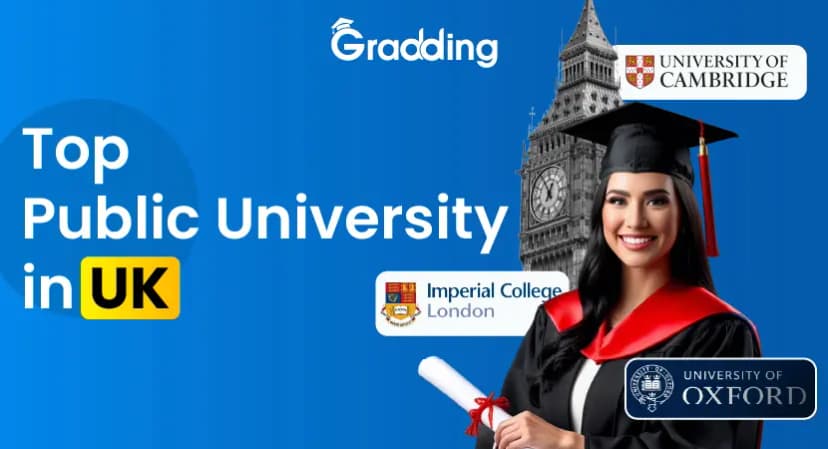
- Public universities (Russell Group schools such as Oxford, Cambridge, and Imperial) dominate the world rankings for UK universities; private universities with prestige in the UK are rare.
Canada
- Unlike the US or UK, Canada actually does not have the concept of “private universities”. All public Canadian universities, including those like Toronto, McGill and UBC, receive funding from the government.
- The yearly tuition cost for foreign students falls in the range of CAD 25,000 to 60,000, depending upon the level of university and the field of study.
- The “private” universities that Indian students refer to in Canada include career or specialised training institutes only.
Australia
- Over 98% of the universities in Australia are public universities, like Canada.
- The tuition fees vary between AUD 25,000 and 50,000 per year, with Go8 universities including Melbourne, Sydney and ANU being charged on the higher side.
- Some private universities also operate in Australia (Bond University, Torrens), which are relatively cheaper but perform lower when ranked internationally.
Germany
- German public universities do not levy any fees for foreign students, including Indian students, and students just have to pay a semester fee, which is generally around €150 to €400, including administration and transportation costs.
- German private universities generally cost €8,000-€25,000 per year and focus on business and science-related fields.
- German public university system, in terms of cost efficiency, is almost unparalleled worldwide, making it one of the top countries to study abroad.
| Country | Public Universities (Annual) | Private Universities (Annual) |
|---|---|---|
| USA | USD 25,000–55,000 | USD 50,000–80,000 |
| UK | £22,000+(international, uncapped) | £20,000–40,000 |
| Canada | CAD 25,000–60,000 | Limited true private options |
| Australia | AUD 25,000–50,000 | AUD 20,000–35,000 |
| Germany | €0 tuition + semester fee | €8,000–25,000 |
Top 10 Private Universities in the QS World University Rankings
Explore the best private universities abroad that are known for their excellence in academics, research, innovation, reputation, and success of their graduates.
| University | Country | QS Rank 2027 |
|---|---|---|
| Massachusetts Institute of Technology (MIT) | United States | 1 |
| Stanford University | United States | =2 |
| Harvard University | United States | 5 |
| California Institute of Technology (Caltech) | United States | 7 |
| University of Pennsylvania | United States | 15 |
| Cornell University | United States | =16 |
| Yale University | United States | =16 |
| Johns Hopkins University | United States | =20 |
| University of Chicago | United States | 24 |
| Princeton University | United States | 27 |
US universities clearly dominate the global rankings, demonstrating the exceptional strength of America’s private higher-education institutions.
Top 10 Public Universities in the QS World University Rankings
Explore the best Public universities abroad which provide an excellent education, research opportunities, international exposure, and an excellent reputation.
| University | Country | QS Rank 2027 |
|---|---|---|
| Imperial College London | United Kingdom | =2 |
| University of Oxford | United Kingdom | 4 |
| University of Cambridge | United Kingdom | 6 |
| ETH Zurich – Swiss Federal Institute of Technology Zurich | Switzerland | =8 |
| University College London (UCL) | United Kingdom | =8 |
| National University of Singapore (NUS) | Singapore | 10 |
| The University of Hong Kong | Hong Kong SAR, China | 11 |
| Nanyang Technological University, Singapore (NTU Singapore) | Singapore | 12 |
| Peking University | China | 13 |
| Tsinghua University | China | 14 |
Want to know your admission chances? Use our University Predictor Tool to calculate your chances of getting into your target universities.
Admission Requirements and Acceptance Rates
Admission requirements and acceptance rates serve as the ultimate benchmarks for applicants, revealing both the specific qualifications a university demands and how intensely competitive it is to secure a seat. Here are the details about public vs private colleges abroad for you to understand better.
Public Universities Abroad
Acceptance Rates
- Broad Ranges: Usually fall in the range of 40%-75% for general admission.
- Top-Class Anomaly: Best public universities abroad (for example, UC Berkeley and University of Oxford) experience a decline to 10%-15%.
- Bottleneck Programs: Some competitive programs such as Computer Science or Engineering may accept less than 5% of applicants, although the university itself accepts many students.
- Limits on Quotas: Most public systems place restrictions on international student intake to be around 10%-15% of the entire population of students due to local taxpayer interest.
Detailed Admission Requirements
- Scholastic Standards-Based Cut-Offs: Use of specific GPA cutoffs (often 3.0 or 80% on a 4.0 or 100% scale, respectively) for the initial assessment of your academic credentials.
- Matching Pre-Requisites: Courses that you have taken at your school/university must meet their criteria for the strict credit requirement in particular fields (for example, math courses are a must-have for STEM majors).
- Language Tests: Rigorous criteria for language proficiency (usually IELTS: 6.5-7.0, TOEFL: 90-100; regional languages e.g., TestDaF in Germany).
- Test Scores: Defined test scores for exams such as the SAT, ACT, GRE, or GMAT.
- Language Requirements: Strict standards for language tests (typically 6.5-7.0 for IELTS and 90-100 for TOEFL; regional languages (for instance, TestDaF in Germany).
- Lesser Emphasis on Soft-Skills: Recommendation letters, SOP, and extracurricular activities have lesser relevance.
Private Universities Abroad
Acceptance Rates
- Elite Tier: Highly selective institutions such as Ivy League, Stanford, and INSEAD admit 4%-10% of applicants.
- Mid-Level Range: Selective private colleges admit around 15%-35% of candidates.
- Consistent Regardless of the Major: The admissions rates are consistently low at the institution level because of strict limits on overall enrolment.
Detailed Admission Requirements
- Holistic Process: Academic performance indicators act as criteria; ultimately, however, it comes down to your personality and suitability for a particular institution.
- Personal Essays: Requires thoughtful personal essays from you, explaining your worldview, your individuality, and how you are an ideal candidate for the institution.
- Activity List/Portfolio: Requires commitment, leadership, service, or exceptional skills.
- Letters of Recommendation: Requires outstanding and personalised letters of recommendation from your teachers or mentors highlighting your character and inquisitive nature.
- Interviews: Involves interviews as an important part of the process to test your communication skills and personality.
- Diverse Academic Profiles: An outstanding art portfolio, entrepreneurial endeavour, or interesting background can adequately compensate for a slightly low GPA or score.
Rankings and Academic Reputation
The global ranking and reputation of institutions is a clear indication of their research strength and prestige. This understanding is important for international students to determine the career worth and marketability of public and private degrees.
Public Universities Abroad
Large public universities often rank well internationally due to their size, research activities, government funding, and academic networks.
- Good International Ranking: Numerous public universities rank highly in the QS and THE rankings, especially those that emphasise research.
- Research Activities: Government funding allows for the construction of research facilities, well-stocked libraries, research centres, and academic publications.
- Faculty and Academic Reputation: Prestigious universities draw top faculty members and academic professionals, enhancing their international reputation.
- Large Alumni Network: Having large numbers of students means that there is a larger alumni network spread out throughout industries, governments, and multinational companies.
- Regional Prestige: Top public universities are often some of the most prestigious institutions available to international students in countries like Germany, the UK, and some Asian countries.
Private Universities Abroad
While private universities may have less of a research presence, most have made a name for themselves by specialising in academics, recruiting top students, engaging with industries, and having considerable financial muscle.
- Specialised Expertise: Private universities excel in certain fields like business, law, arts, and others that require specialisation.
- Highly Prestigious Institution: Top private universities have well-established reputations that go way beyond being rated on a global scale.
- Industry Connection: Partnerships with corporations, networking with alumni, and vocational programs enhance their attractiveness to employers.
- Selective Admissions: The very selective ones could be seen to embody rigorous education, exclusivity and great professional connections.
- Teaching Emphasis: Private institutions give priority to teaching small groups and fostering interactions between students and faculty members instead of doing research.
Scholarships and Financial Aid
Public and Private, both types of institutions provide financial assistance, although the kind and extent of support provided vary significantly. Here is a clear difference between public vs private universities for international students in terms of scholarships and financial aid.
Public Universities
- Emphasise the use of government-sponsored scholarships and those that are based on merit, rather than institution-based scholarships.
- The German public school system does not charge tuition fees at all, so the "scholarship" has already been incorporated into the fee structure.
- The UK has some government-sponsored scholarships linked with their public institutions, which include the Chevening and GREAT Scholarships.
- Merit-based scholarships are available in Australia through their public universities.
Private Universities
- The private US universities are known for providing need-based grants in abundance. A few top private Ivy-League schools provide 100% financial need assistance for admitted students that may end up having lower net cost than the public university price tag.
- The best private universities abroad usually have the advantage of offering more merit or university specific scholarships owing to greater flexibility in terms of grant provision without any state intervention.
- The level of aid can vary widely from year to year and applicant to applicant, making it important for students to check university’s official portal.
Career Outcomes and ROI
Placement figures and starting salaries are often cited as reasons where one category among Public Vs Private Universities abroad may be better, here is the real story.
- Top schools in both categories have strong placement figures. Public flagships such as UC Berkeley and Michigan provide figures that compare favourably with many private universities in the field.
- US Ivy League as well as other top-tier private institutions do record some of the highest starting salary averages worldwide, often ranging between $100,000-$150,000 for STEM and business degree graduates. This is primarily because of effective networking and alumni connections.
- Public universities that have strong industry connections in a particular field, for instance engineering at a prestigious public technical university, have the potential to perform better than a mid-ranking private university in the same field in terms of ROI.
- The program’s industry connections, the location of the campus, and the ranking in the industry are more important determinants of ROI than whether the university is public or private.
How to Choose Between a Public and Private University Abroad?
Once you've compared the actual numbers for your shortlisted universities, the decision usually comes down to a few practical questions:
1. What is your overall budget?
If cost is the limiting factor, then public universities in countries such as Germany, Canada or Australia should take precedence over any other private universities.
2. Is the program suited for the expertise of the university?
A private university that specialises in your field might outweigh the prestige of a public university.
3. How significant is the particular rank for your career aspirations?
In the case of recruitment-dependent professions like investment banking or consultancy, a more highly ranked college is preferred, whether private or public.
4. What type of financial aid can you realistically obtain?
Calculate costs after subtracting financial aid rather than before because a private university which offers excellent need-based financial aid could turn out to be less expensive than a public one without it.
There is no one right answer regarding which college is the best. The most suitable choice for you will depend upon your financial condition, program preference, and career aspirations. Consult our study abroad consultants to get personalised advice on university comparison and selection.
Frequently Asked Questions
1. Are public universities cheaper than private universities abroad?
Generally, yes, especially in Germany, Canada, and Australia. But in the US and UK, aid packages can sometimes make private universities cost less than the public sticker price.
2. Should Indian students choose public or private universities abroad?
It depends on budget, program fit, and career goals. Germany's public system suits cost-conscious students; strong private aid in the US can suit others better.
3. Which universities offer better placements—public or private?
Both can perform well. Placement quality tracks the specific university's ranking and industry connections more than its public or private status.
4. Is it easier to get admission to private universities abroad?
Not always. Elite private universities like the Ivy League are highly selective, while several mid-tier private institutions are easier to enter than top public flagships.
5. Which universities provide better scholarships for international students?
US private universities often lead in need-based aid. Public universities in Germany, the UK, and Australia offer strong government-funded scholarship programs.
6. Do employers prefer graduates from public or private universities?
Employers generally prioritise university ranking and program reputation over public or private status. Both categories produce highly employable graduates at the top tier.
7. Which type of university offers better ROI for international students?
ROI depends on program strength, industry demand, and total cost after aid, not on category alone. Compare specific universities rather than assuming one type wins.
8. How do I choose between a public and private university abroad?
Compare total cost after aid, program strength, ranking relevance to your career goals, and post-study work rights for your target country before deciding.
9. Which universities offer better campus facilities and student support?
This varies by institution and funding level, not by category. Well-funded public and private universities both invest heavily in facilities and support services.
10. Which universities have higher acceptance rates—public or private?
It varies widely. Public flagship universities and elite private universities can both have low acceptance rates, while mid-tier institutions in either category tend to accept more applicants.
0 comments


Hand Picked Courses
Get Scholarship Assistance
Get Offer in 15 Days*
Finance/Loan Assistance
I want FREE assistance with






Ready to Start Your Study Abroad Journey?
Connect With Us!